Nutrition Notes
The Weekly Rhythm of Food Choices and Weight Awareness
A record of how the pattern of weekly meals — their timing, variety, and composition — bears on gradual weight change over months rather than days.

The idea that seasonal produce ought to form the backbone of a well-considered weekly diet is not new — it appears in nutritional writing at least as far back as the postwar era, and in folk culinary tradition considerably earlier. What is less documented is what it actually looks like, week by week, to follow this principle with attention rather than rigour — to allow the season to suggest the plate rather than to impose it.
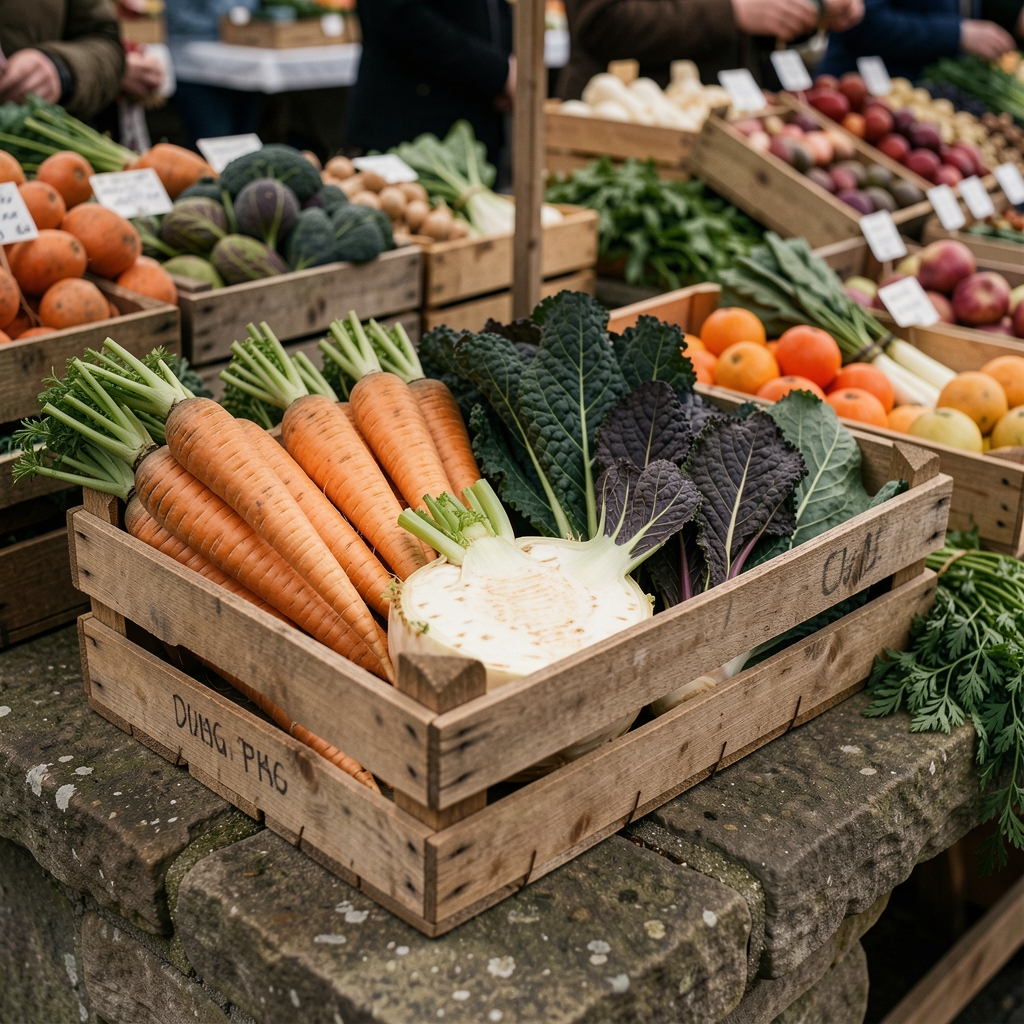
The log began in the first week of February, when the London market offers were at their narrowest: root vegetables, kale, leeks, and a few varieties of squash still in good condition from autumn storage. The constraint was not unpleasant. A limited range of ingredients, it turned out, encouraged a different kind of cooking — more attentive to preparation method, more willing to return to the same vegetable twice in a week but differently arranged.
By mid-March, the first of the British spring produce had arrived: purple-sprouting broccoli, the earliest asparagus from warmer southern counties, radishes, and wild garlic from the hedgerows. The shift in the log was immediate. The entries for vegetable variety increased sharply. Meals that had been organised around a single roasted root now contained three or four distinct plant elements, assembled loosely but with more evident pleasure in the combination.
The interesting observation — and it is only an observation, not a demonstration — was that this increased vegetable variety seemed to correlate with a reduced inclination toward what one might call reflexive eating: reaching for food outside of meals because the meals themselves had not quite satisfied. The spring plate, with its greater variety, appeared to arrive at something closer to nutritional completeness more readily than the simpler winter one.
Published dietary research consistently supports the value of variety in vegetable and fruit intake. The mechanisms are well understood: different plants contain different combinations of fibre, micronutrients, and phytocompounds, and a diet narrow in its plant range tends to be correspondingly narrow in its nutritional range. The recommendation to eat a wide variety of vegetables is as close to a consensus position as nutritional science offers.
What seasonal eating offers, as a practical framework, is an externally imposed variety — not the result of a decision to eat more diversely but simply the consequence of what is good at a given time of year. In February, the decision to eat well is a decision to work with roots and brassicas. In March, it is a decision to work with the new growth. The variety arrives as a natural function of time, rather than as an act of nutritional willpower.
This has practical significance for anyone who has found that elaborate food plans are difficult to sustain. The seasonal market does not require a plan: it requires only the habit of going, and a willingness to cook what is actually present rather than what one had imagined cooking. The log confirmed this at every visit. The meals that followed from market produce were more varied than the meals that followed from a pre-determined weekly shop.
"The seasonal market does not require a plan. It requires only the habit of going — and a willingness to cook what is actually present."

The log did not operate under a plant-based directive. Meals including fish, eggs, and occasional meat appeared throughout. But the seasonal emphasis meant that, in practice, the majority of meals were organised around a plant ingredient as their primary component. The question of what to eat was answered, most evenings, by the question of what vegetables were at their best.
The nutritional result of this approach — without any deliberate intention — was a weekly diet considerably higher in fibre, micronutrient density, and plant variety than would be typical for a standard London eating week. This was not a virtuous outcome, achieved through effort. It was a structural one, produced by allowing the season's best produce to occupy the centre of the plate rather than its periphery.
Plant-based meals, in this context, were simply the most natural response to having good vegetables on hand. The spring weeks produced a high proportion of such meals — not from principle but from appetite. Purple-sprouting broccoli, simply roasted, is an excellent dinner. Asparagus with a soft egg requires almost no recipe. These are meals that satisfy without requiring the protein-heavy architecture that winter cooking tends to demand.
One of the unexpected observations from the spring weeks was a shift in portion instinct. In the narrower winter weeks, there was a tendency to eat more of what was available — larger portions of a single element — as a means of reaching satisfaction. In the spring weeks, with more variety on the plate, a smaller amount of each component arrived at the same satisfied endpoint.
This is consistent with what nutritional research describes as sensory-specific satiety: the observation that appetite for a specific food diminishes as that food is consumed, while appetite for a different food remains. A plate with more variety engages more of this satiety mechanism across the meal, and thus tends toward satisfaction at a lower total volume. The practical implication is that variety in vegetables and fruit is not only nutritionally desirable but has a direct relationship with portion awareness, independent of any deliberate effort.
For weight awareness — the felt sense of a body neither overfed nor underfed — the spring weeks were, in the log's record, the best weeks. Not the most dramatic, not the weeks of greatest effort, but the weeks of greatest ease. The seasonal produce had done most of the work.
The relationship between seasonal eating and long-term weight awareness is not often framed this way in nutritional popular writing, which tends to focus on foods to add or remove rather than on the structural character of the weekly diet. But the log suggested that this structural framing — what is the character of my food week, taken as a whole? — is the more useful question for anyone trying to understand weight over time.
The seasonal approach, because it varies naturally across the year, avoids the monotony that tends to undermine more prescriptive dietary frameworks. A person eating seasonally in London is eating quite differently in February than in June — not because they have changed their principles, but because the produce has changed. This built-in variety is itself a form of nutritional insurance against the narrowing that tends to occur when eating patterns become habitual in a restrictive rather than expansive sense.
The log ended in mid-April with a tentative conclusion: that seasonal vegetables and fruit, organised as the centre rather than the complement of the weekly plate, represent one of the more practical frameworks for sustained nutritional balance and steady weight awareness that the ordinary domestic cook has access to — not because they demand a particular effort, but because they provide, week by week, the variety that both the body and the appetite require.

Eleanor Whitfield is the founding editor of Flatoren Compendium. She writes on nutrition practices, food patterns, and weight awareness from an observational, evidence-informed perspective.
More from this writer →
A record of how the pattern of weekly meals — their timing, variety, and composition — bears on gradual weight change over months rather than days.
Field notes on the relationship between regular physical activity and the eating patterns that surround it — what changes when movement becomes habitual.